2002 Honda Accord: Is It Still Worth Buying in 2025?
I recently spent a weekend helping a friend shop for a used sedan under $5,000. After test-driving several cars, we kept coming back to the 2002 Honda Accord. It's one of those cars that just refuses to die, and for good reason. The 2002 Honda Accord represents the last generation before Honda moved to a more complicated transmission and engine setup, making it a sweet spot for reliability. But is it still a smart buy two decades later? Let me walk you through what I've learned from owning one and helping others find their own.
Why the 2002 Honda Accord Still Has a Following
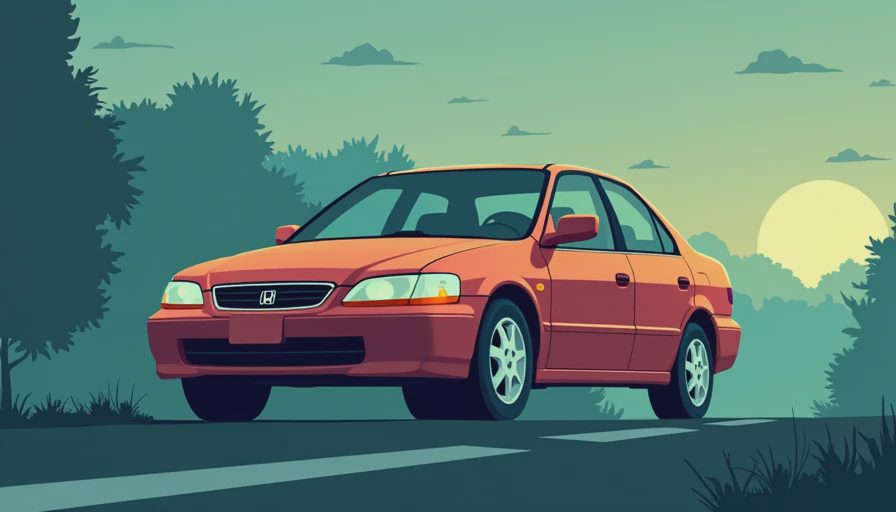
The sixth-generation Accord, built from 1998 to 2002, is legendary among budget-minded drivers. I owned a 2002 Honda Accord EX with the 2.3L four-cylinder and automatic transmission. It got 24 city and 30 highway, and aside from routine oil changes and a single timing belt replacement at 105,000 miles, it never needed major work until I sold it with 180,000 miles on the odometer. The cabin is roomy enough for four adults, the trunk swallows a week's worth of groceries, and the seats are comfortable on long trips. Owners routinely report hitting 250,000 miles with basic maintenance. That kind of longevity is rare in modern cars.
The 2002 model year also offers a choice between a 2.3L four-cylinder and a 3.0L V6. The four-cylinder is the smart bet for economy and reliability. The V6 delivers more power but pairs with a transmission that's more prone to failure. Either way, you get a solid chassis, decent safety ratings for its era, and a driving experience that feels more substantial than many econoboxes.
Common Problems to Watch For
Every 2002 Honda Accord has a few known issues. The automatic transmission in V6 models is notoriously fragile, with failures often occurring between 100,000 and 120,000 miles. The four-cylinder's auto is more robust, but some owners report harsh shifts or hesitation—a sign of wear. The air conditioning compressor can seize, and the power window regulators tend to break, leaving the glass stuck down. Rust is another concern, especially around the rear wheel wells and on the undercarriage if the car lived in the Salt Belt.
The timing belt must be replaced every 105,000 miles. If the previous owner skipped it—and many did—budget $600 to $800 for the job. A broken timing belt usually totals the engine. Check the Carfax for service records. I once passed on a 2002 Honda Accord with 130,000 miles because the seller had no proof of timing belt service. Six months later, that car was listed for parts on Craigslist.
Insurance Costs for the 2002 Honda Accord
The 2002 Honda Accord is cheap to insure. Because it's an older car with good crash test scores (four out of five stars in frontal offset tests), comprehensive and collision coverage are inexpensive. Liability-only policies often run under $50 per month for a clean driver. Some insurers charge a bit more for the V6 trim due to higher theft rates, but the difference is small. If you're a teen or young adult, the Accord's low cost and high reliability make it a smart choice to keep premiums down. I recommend shopping around with companies like GEICO, Progressive, and State Farm. You might be surprised how low the quotes go.
How to Find a Good One for Sale
Start your search on Facebook Marketplace, Craigslist, and OfferUp. Avoid cars with obvious body damage, mismatched paint, or a salvage title. The sweet spot is a 2002 Honda Accord with 100,000 to 150,000 miles, a single owner, and a thick stack of service records. Expect to pay $3,000 to $5,000 depending on condition. The V6 coupes look sporty but hold value worse and cost more to fix. The four-cylinder sedan is the best bang for the buck.
Always get a pre-purchase inspection from a trusted mechanic. It costs $100 to $150 and can save you from a $2,000 transmission replacement. Test the air conditioning, roll all windows up and down, and drive at highway speeds to feel for transmission shudder. Check the rear wheel wells for rust bubbles. A Carfax report is worth the $40—reveals accidents, service gaps, and number of owners.
The 2002 Honda Accord vs. Its Competitors
The 2002 Toyota Camry is the Accord's closest rival. Both are reliable, but the Accord drives better and has a more modern interior. The Nissan Altima of that era suffers from poor transmissions and flimsier build quality. The Chevrolet Malibu and Ford Taurus are cheaper upfront but cost more in repairs. For the used market, the 2002 Honda Accord commands a premium for good reason: it holds its value and lasts longer. A $4,000 Accord will easily outlast a $3,000 Malibu.
Verdict: Is the 2002 Honda Accord Still Worth It?
Yes, absolutely—if you find a clean example. The 2002 Honda Accord delivers a rare mix of reliability, low ownership costs, and practicality that's hard to beat, even by newer cars. It lacks modern features like Bluetooth or backup cameras, but as a dependable daily driver or a first car, it's one of the best choices under $5,000. Do your homework, watch for the automatic transmission in V6 models, and keep up with maintenance. You'll likely get many more years of service. I've owned three from this generation, and each one paid for itself many times over.



Letters
No letters yet — be the first to write.